Hermitage of Annaya
“Here is Your Son”
A fourfold story
The milestones below mirror the paragraphs shared by parishioners for this page—capturing early life, priesthood, sainthood, and the feasts that keep his memory alive.
Early Life
Born May 8, 1828 in the mountain village of Bqaa Kafra (بقاع كفرا), Joseph Makhlouf was the youngest of five children in a devout Maronite family that prized prayer, Scripture, and mercy.
Priesthood
Sixteen years in the Monastery of St. Maroun forged in him a life of asceticism, mortification, and constant prayer—choices he made to draw closer to God and to serve the community humbly.
Sainthood
Beatified December 5, 1965 by Pope Paul VI, who called him “a new, eminent member of monastic sanctity,” and canonized October 9, 1977. His holiness continues to inspire across the globe.
Feast Day
Our parish honors him with community celebrations around his October 9 canonization anniversary and again on the third Sunday of July, his official feast in the Maronite Calendar.
A pilgrimage in words
Journey through Saint Charbel's life in the words passed down by witnesses, organized here as a series of reflective chapters.
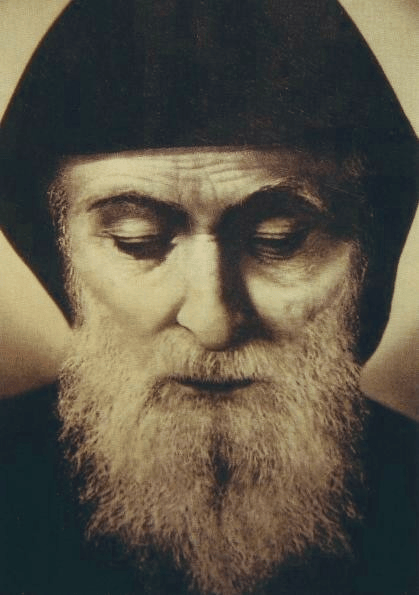
Saint Charbel is the first Confessor of the Eastern Church raised to the glory of the altars in modern times. He was born on May 8, 1828 in the little village of Bqaa Kafra (بقاع كفرا) in the high mountains of Northern Lebanon from poor, but respectable and devout parents. When he was baptized, he was given the name of Joseph.
He was the last of five children; two brothers and two sisters were born before him into that blessed family. He learned a profound and sound piety from his parents and cultivated these seeds of sanctity with generous care, with continuous prayer and, since his adolescence, with a life inspired by detachment and denial of worldly vanities. He was always seeking interior and exterior solitude.
At the age of twenty-three he left his parent's house to go as a novice to the Monastery of Our Lady of Mayfouk in the North of Jbeil. Some time later he was transferred from the Monastery of Our Lady of Mayfouk to the Monastery of St. Maroun in Annaya (the Lebanese Maronite Order).
In 1853, after the two prescribed years of novitiate, he pronounced the vows of poverty, chastity and obedience, choosing the name of Charbel, an old Oriental martyr.
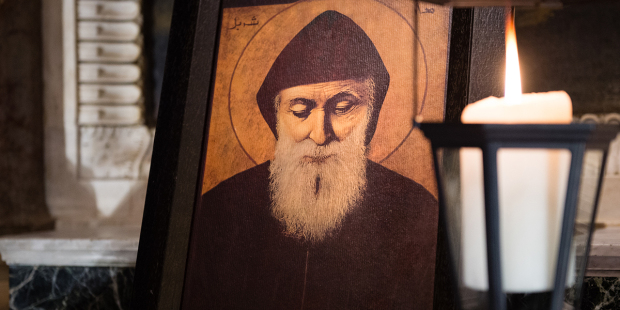
His mother and other members of his family, having found his shelter, reached him and begged him to return home, but it was useless, because he refused firmly and followed his vocation. He renounced the pleasure of seeing his home, his relations and even his mother for ever, having made up his mind and cut off all ties with the world in order to devote himself completely to God, without any reserve.
After pronouncing his solemn monastic vows, Saint Charbel was sent by his superiors to the Monastery of Kfifan to finish his religious studies. He was fortunate to meet two professors who were well known in the Maronite Order for their virtues and their theological and ascetical learning, namely the R.F.Nimatullah Al-Kafri and the R.F.Nimatullah Kassab Al-Hardini. Following the teaching and the example of these two outstanding Fathers, Blessed Charbel laid to heart the seeds of virtue and monastic perfection.
Saint Charbel was ordained priest in 1859 and then went back again to the Monastery of St. Maroun in Annaya. There he performed all his Holy services in a very edifying way, while carrying on every kind of manual work. He accomplished all the duties of monastic life with deep humility; perfect obedience, strict poverty and heroic chastity that made him resemble an angel.
Saint Charbel spent sixteen years of severe ascetic life, always in prayer, mortification and self-denial in the Monastery of St. Maroun, a life which he had chosen to be able to come closer to God. He was then permitted in 1875, by his superiors, to retire to the hermitage of St. Peter and St. Paul in Annaya, a property of the Monastery of St.Maroun.
The hermit does not live independently in the solitude of his hermitage, but remains at the disposal of his superiors, following a very severe and strict discipline. In the Eastern Church, Hermetic life is quite strict and belongs to the Constitutions of the Lebanese Maronite Order founded in Lebanon in 1695 and approved by Pope Clement XII in 1732.
Saint Charbel chose this solitude not to live according to his own mind, but to practice virtue and his religious vows in a heroic way. Contemplation, manual work, fasting, continuous prayer, short rest on a hard couch and much more. All these ascetic practices are part of his daily life. In such a way, for twenty-three years, from 1875 when he entered the hermitage to 1898 when he died, Blessed Charbel dedicated himself with all his strength to a solitary life of perfection, penance, and mortification.
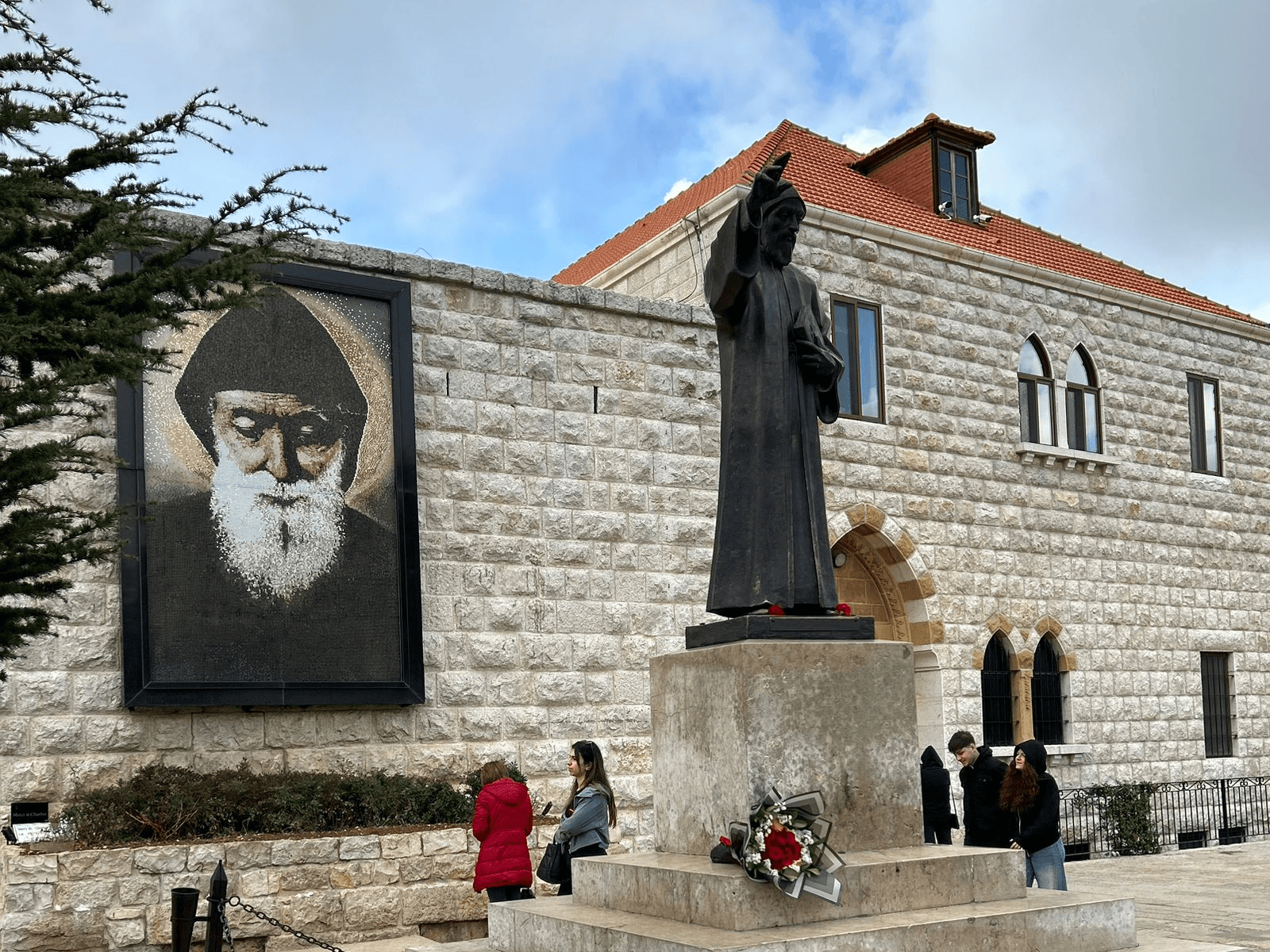
God wanted to reward Saint Charbel by allowing him to perform extraordinary deeds during his life. He carried out many miracles, once saved his brethren from a snake by asking the animal to go away; his lamp was lighted with water; he cured a mad person by saying a prayer and the imposition of his hands; while going to visit a sick person he was aware of his death before reaching his house, and he was able to free with holy water some fields invaded by grasshoppers.
On December 16, 1898, while he was celebrating Mass, at the Elevation of the Host, when – according to Maronite Liturgy – he was saying this prayer: «Father of Truth, here is Your Son, Victim of Expiation; here is the Blood which intercedes for me, it is my offering, accept it» he suffered an apoplectic stroke from which he never recovered. He remained between life and death for eight days, repeating the prayer mentioned above, and on the 24th of December, on Christmas Eve, at the age of seventy, he died and entered Heaven comforted by the Holy Sacraments of the Church.
“0n the 24th of December 1898, he was called to God after receiving the Sacraments of the Church. The hermit Father Charbel Makhlouf of Bqaa Kafra was struck by paralysis. He was seventy. Because of what he will do after his death, I need not talk about his good behavior and, above all the observance of his vows, and we may truly say that his obedience was more angelic than human.”
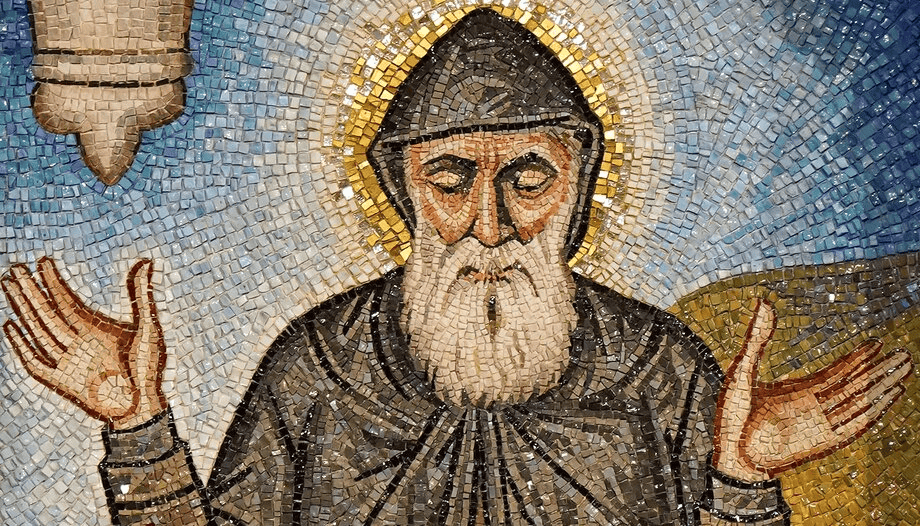
“According to science and conscience, we must say that an eye so ill and for so long was certainly lost for ever. Therefore, we cannot explain how it has been cured, certainly not through natural means. We need to consider this extraordinary fact with great humility, and to attribute it to an Almighty Will that operates only by divine grace. There is no other explanation, and it is certain that we have seriously sought an explanation without finding one.”
The example Saint Charbel had set, as a monk living in complete solitude and prayer and his love of God, induces us in the midst of this restless and materialistic world, to be silent in order to meet God and to establish an interior desert in our souls and to listen to the appeals of His grace. This is a desert which does not make one poor; but rich, a solitude which does not cut us off from others, but which attracts souls to pray and which gives the world the graces necessary for salvation for the glory of God.
Each one of us will be able to follow St. Charbel according to his own measure, escaping from the world when it is an enemy to God and from sin. In fact, the Church presents the Hermit of Lebanon not only to our veneration, but also as a model to all Christians.
“Glory to the Father who crowns the struggles of the Saints, Glory to the Son who shows His power in their relics, Glory to the Holy Spirit who works through their mortal remains to give us a comfort in every sorrow”
Miracles that echo here
These highlights summarize the miraculous accounts recorded in the biography and in our parish archives.
Sister Maria Abel Kamari, bedridden for fourteen years, walked unaided minutes after praying at his tomb on July 12, 1950.
Alessandro Obeid, whose retina was torn in 1937, regained full sight after years of prayer at Annaya—his doctors called it a miracle.
Forty-five nights of light hovered above his grave, and every exhumation revealed an incorrupt body exuding a consoling blood-like liquid.
Want to read more?
Dive deeper into the archives, miracles, and pilgrimages that continue to shape the faith of our community.
Sunday Mass
11:00 AM & 6:30 PM
Saturday Vigil
5:30 PM (Confession before & after)
Weekday Mass
Tuesday – Friday · 6:30 PM